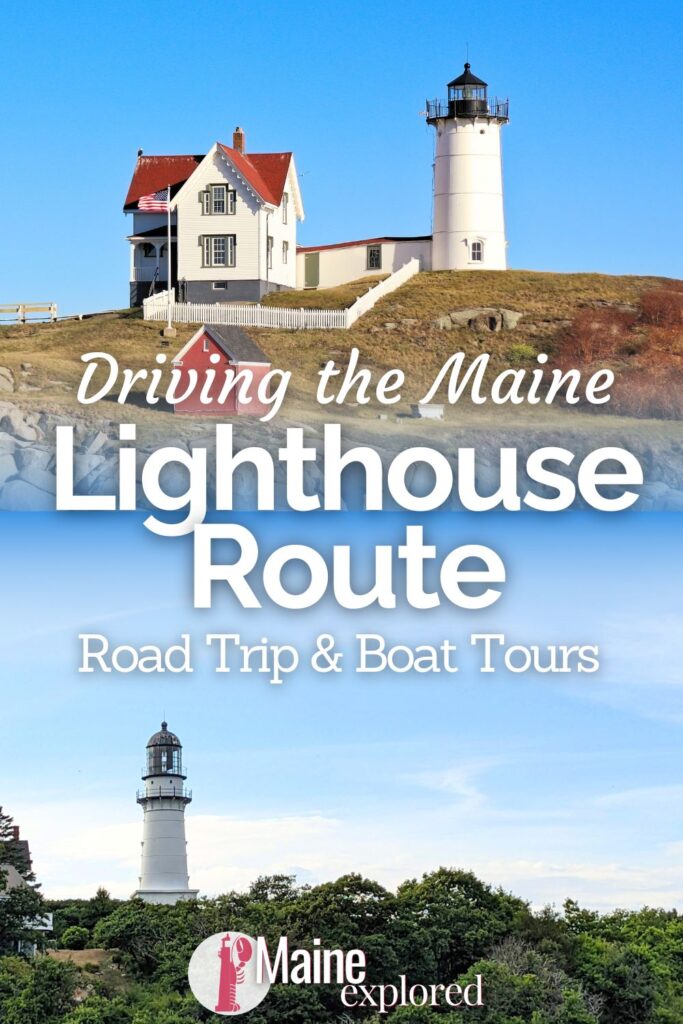
Maine lighthouses are one of my favorite things to talk about, and I know you’re going to love visiting as many as you can. With more than 65 along one of the most varied coastlines on the Eastern Seaboard, more than any other state in the region, Maine’s lighthouses are iconic and beautiful. These aren’t just scenic backdrops; they mark a real working coastline with centuries of maritime history behind every stone tower. The lighthouse route is one of the trips we get asked about most, and for good reason: no two stops feel the same, and the route is amazing for visitors who show up with a plan.
This guide organizes the best Maine lighthouses by coastal region, from the southern beaches up through the Midcoast and into Acadia and the Downeast shore. Each section covers what to expect on the ground, how to get there, what you’ll pay, and what access actually looks like. The photography and planning sections at the end pull everything together for a trip that’s worth the drive. If you have any questions about visiting Maine and its lighthouses or need additional travel recommendations, please leave a comment or send us a note. We’re always happy to share more and help you plan an incredible visit to Maine!
What Makes Maine’s Lighthouse Coast Worth a Dedicated Trip
Maine light stations aren’t a single type of structure. The coast and rivers offer a genuinely varied mix of conical, octagonal, and cast-iron towers set against dramatically different landscapes: rocky headlands, harbor breakwaters, offshore islands, and forested cliffs. That architectural and geographic variety means that visiting five or six lighthouses in a week never feels repetitive, especially when some of them require a little bit of hiking.
The other thing visitors consistently don’t understand is how spread out the coast actually is. Maine’s coastline, measured by all its tidal inlets and peninsulas, stretches roughly 3,500 miles. That means the driving distances between lighthouse clusters are real, and a route between just two or three lighthouses that looks manageable on a map can take a full day to execute properly. The three parts of the coast to work through are: the southern coast from Kittery to Bath (including Portland), the Midcoast from Bath to Rockland and Camden, and the Downeast and Acadia stretch from Ellsworth out to Lubec. Think of these as logical overnight zones, not just geographic labels, and even within each section you cannot visit all of their lighthouses in one day.
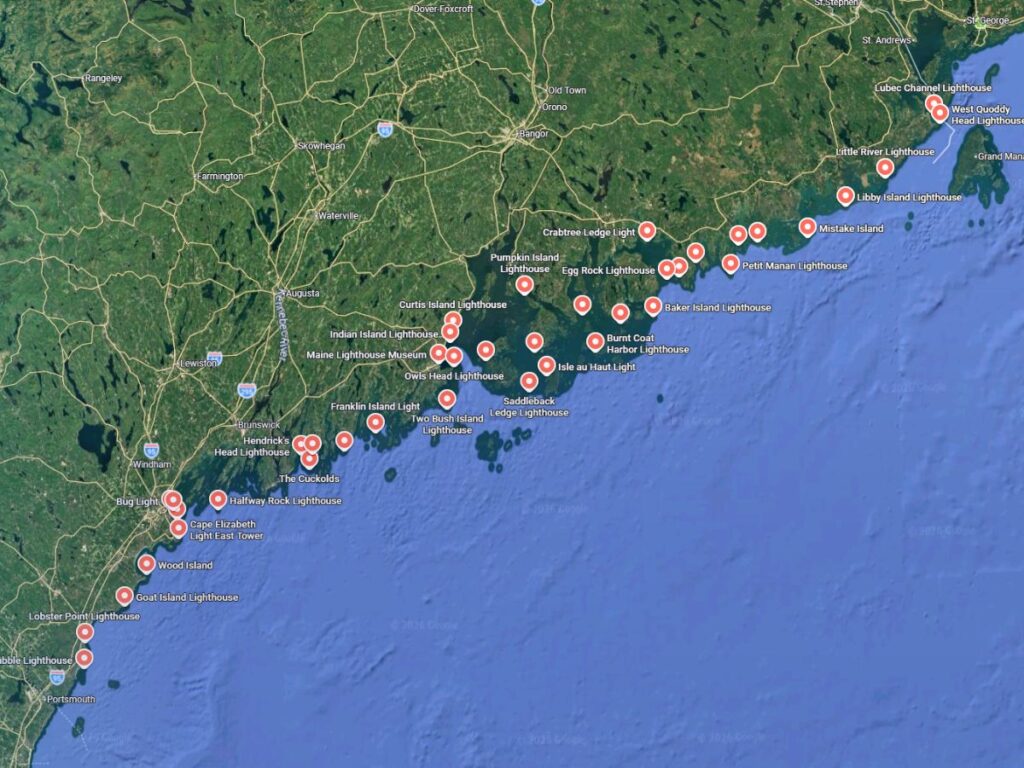
Here’s a map of 40 of Maine’s lighthouses, most of which can be seen from land or a boat tour.
Southern Maine Lighthouses: Cape Neddick to Portland
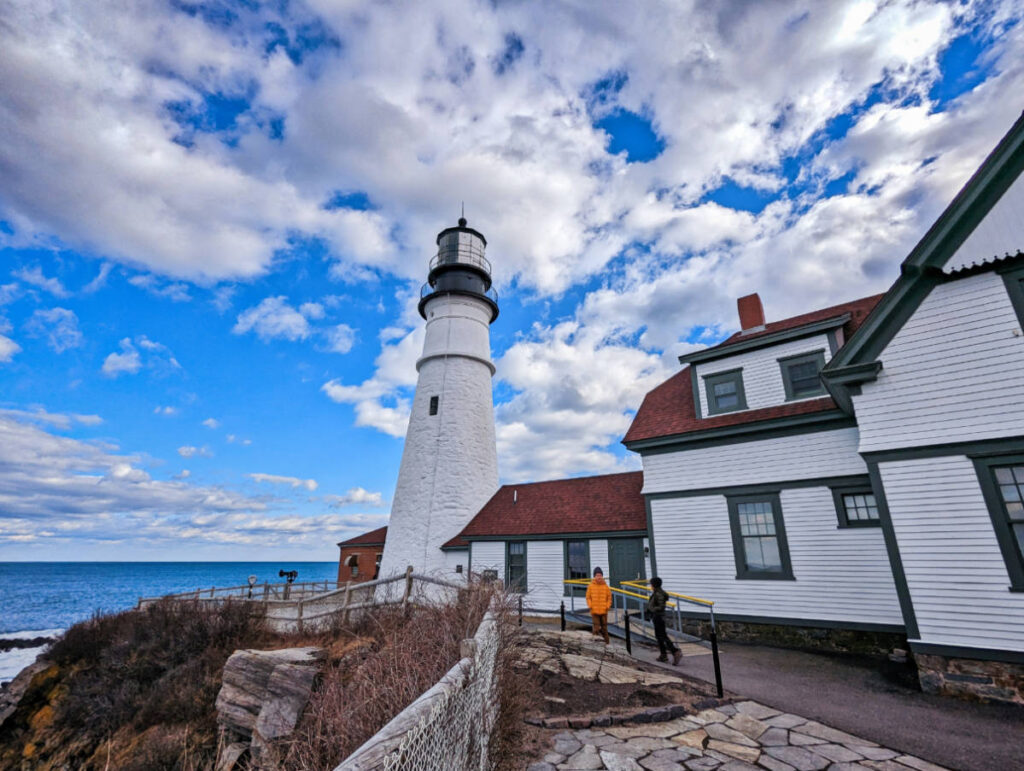
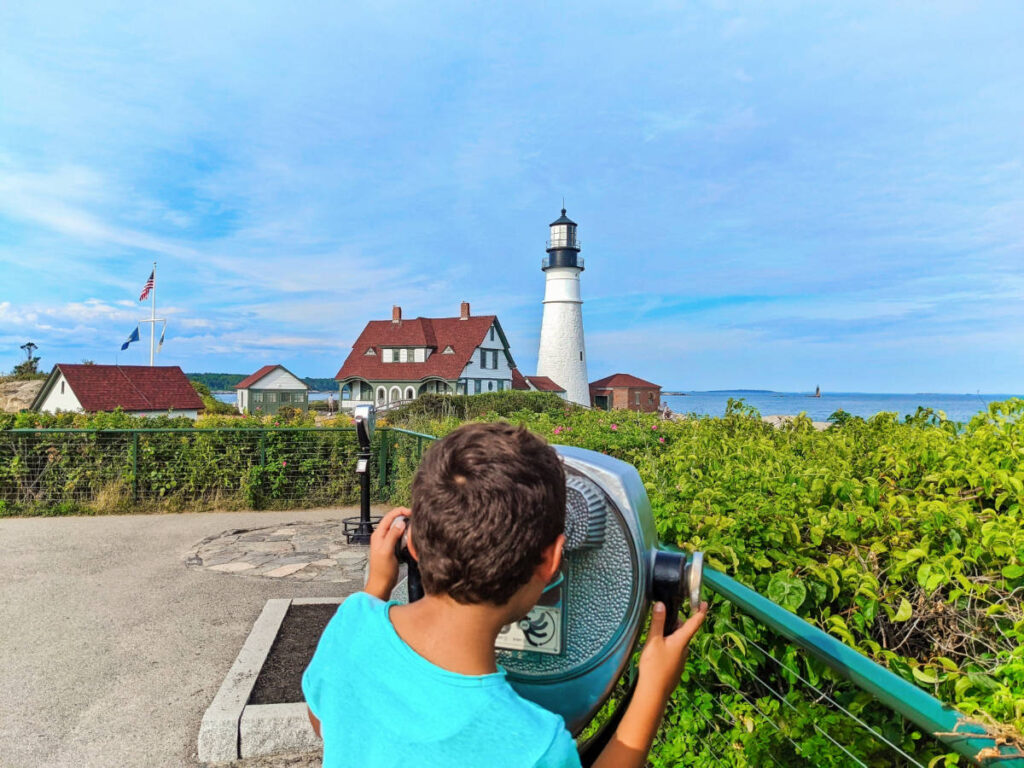
Portland Head Light is the anchor of any southern Maine lighthouse itinerary. Sitting inside Fort Williams Park in Cape Elizabeth, it’s the most visited lighthouse in the state and is the oldest, commissioned by George Washington. The park uses a pay-and-display parking system, running $6 for the first two hours and $2 per hour after that, with credit and debit card payment only. The museum in the keeper’s house is open Memorial Day through Indigenous Peoples Day, daily from 10am to 4pm, with admission at $2 for adults and $1 for children 6 to 18. The tower itself opens to the public just one day per year, on Maine Open Lighthouse Day, which falls on September 13 (for 2026, or thereabouts in other years). The grounds are wheelchair accessible, with disability parking close to the lighthouse.
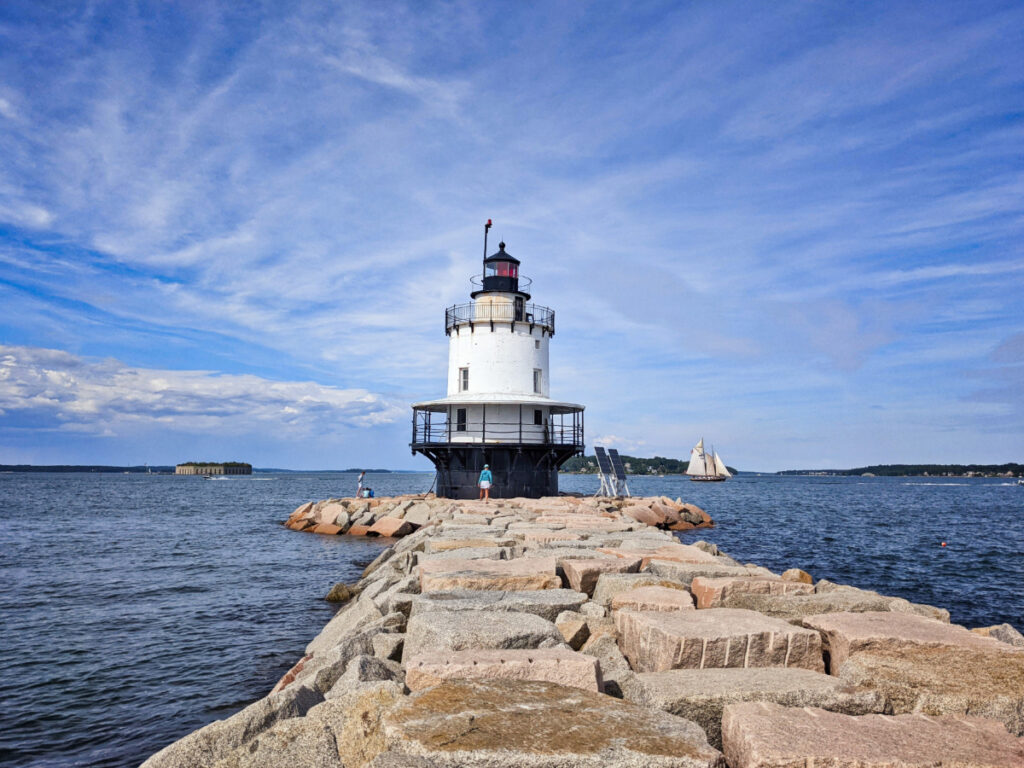
Three more stops complete the southern circuit. Spring Point Ledge Light in South Portland sits at the end of a 900-foot granite breakwater walk that gives a completely different experience from cliff-top sites, and then the Portland Breakwater Light, aka the Bug Light, is very nearby and is the CUTEST lighthouse in Maine. Two Lights State Park in Cape Elizabeth offers a coastal hiking loop within a few miles of Portland Head Light, makin it a natural same-day pairing, but to see the Cape Elizabeth Lighthouse, it’s actually outside of the state park, so don’t be fooled. Both are road-accessible with standard parking areas, and neither requires advance planning beyond knowing where to pull off.
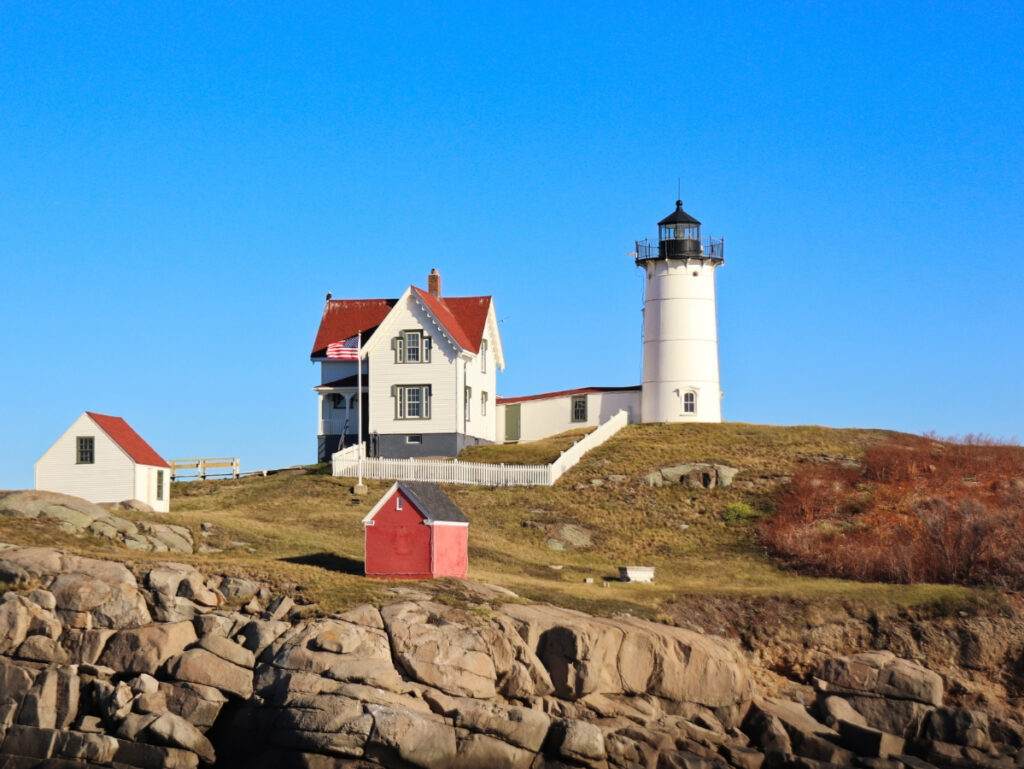
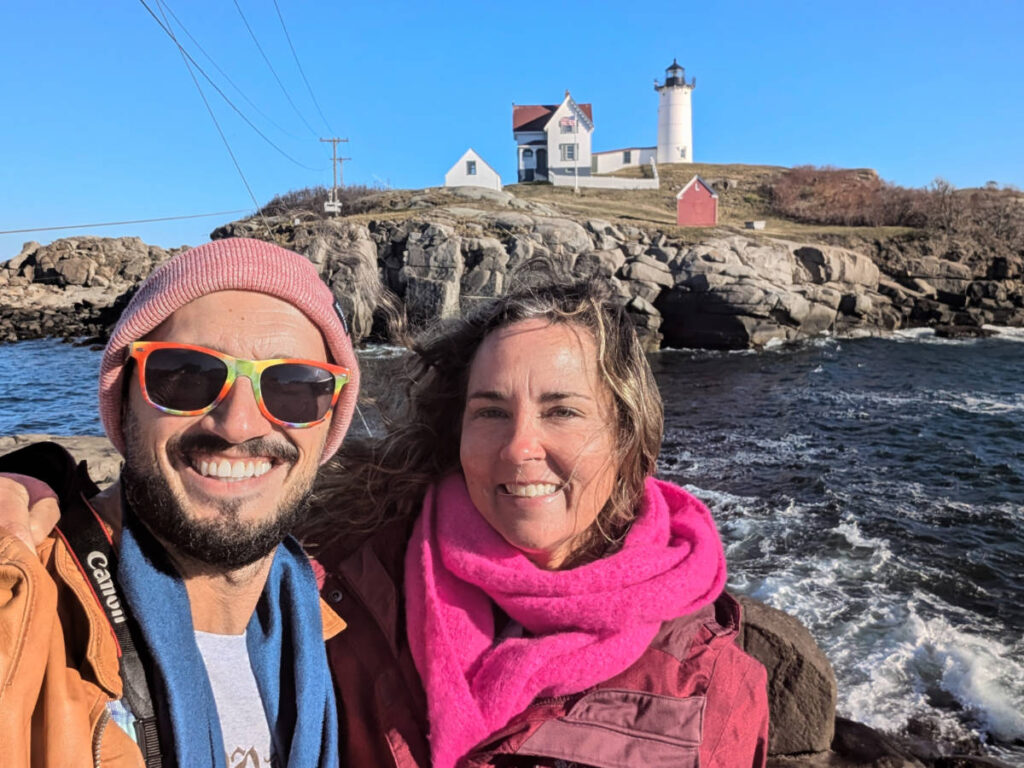
Since I’m assuming that we’re starting in Portland for visiting the lighthouses in Southern Maine, we now head south through Old Orchard Beach to Kennebunkport and the Goat Island Lighthouse out at Cape Porpoise. Stop in Kennebunkport to enjoy walking around and maybe do a lobster boat tour (the Rugosa is really fun!), and then continue south to Ogunquit where you’ll see the funniest light station, the Lobster Point Light. Keep on going and you’ll make it to Cape Neddick where you’ll find the Nubble Lighthouse. If you want to keep going, the final lighthouse is the Whaleback Light which is out on a rock and can be seen from the Whaleback Light Observation Point at Fort Foster Park in Kittery. That does it for the southern Maine lighthouses to visit or see.
Southern Maine lighthouse parking and fees
Costs along the southern route are inexpensive. Fort Williams Park (Portland Head Lighthouse) charges for parking but keeps museum admission under $2 per person. Parking is free for the Bug Light and Spring Point Ledge. Pemaquid Point levies a small per-person grounds fee, while Two Lights State Park has standard state park fee for recreation (no lighthouse here), and then there are free municipal lots at the other stops.
Southern Maine Lighthouses List
Here are the lighthouses you can see while visiting Southern Maine, albeit a few may need binoculars.
- Whaleback Light, Kittery
- Nubble (Cape Neddick) Light, York
- Lobster Point Light, Ogunquit
- Goat Island (Cape Porpoise) Light, Kennebunk
- Cape Elizabeth Light, Cape Elizabeth
- Portland Head lighthouse, Cape Elizabeth
- Ram Island Ledge Lighthouse, Cape Elizabeth
- Spring Point Light, South Portland
- Portland Breakwater (Bug) Light, South Portland
Midcoast Lighthouses and Boat Tours
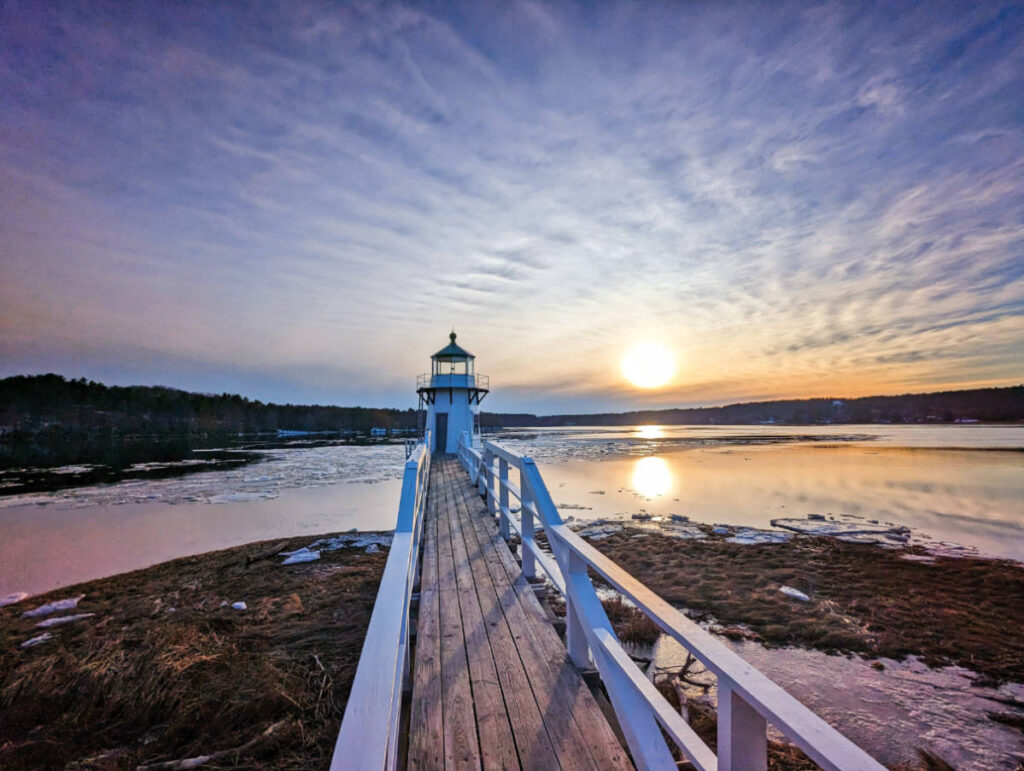
The stretch from Bath to Camden holds the densest concentration of accessible lighthouses on the entire coast. You can check out the Doubling Point and Squirrel Point lighthouses very near Bath on the Kennebec River, and then visibly from Popham Beach you can see the Pond Island Lighthouse and Seguin Island Light Station. When you’re done here, head north to your next stop, which really could be all day with the many things to do.
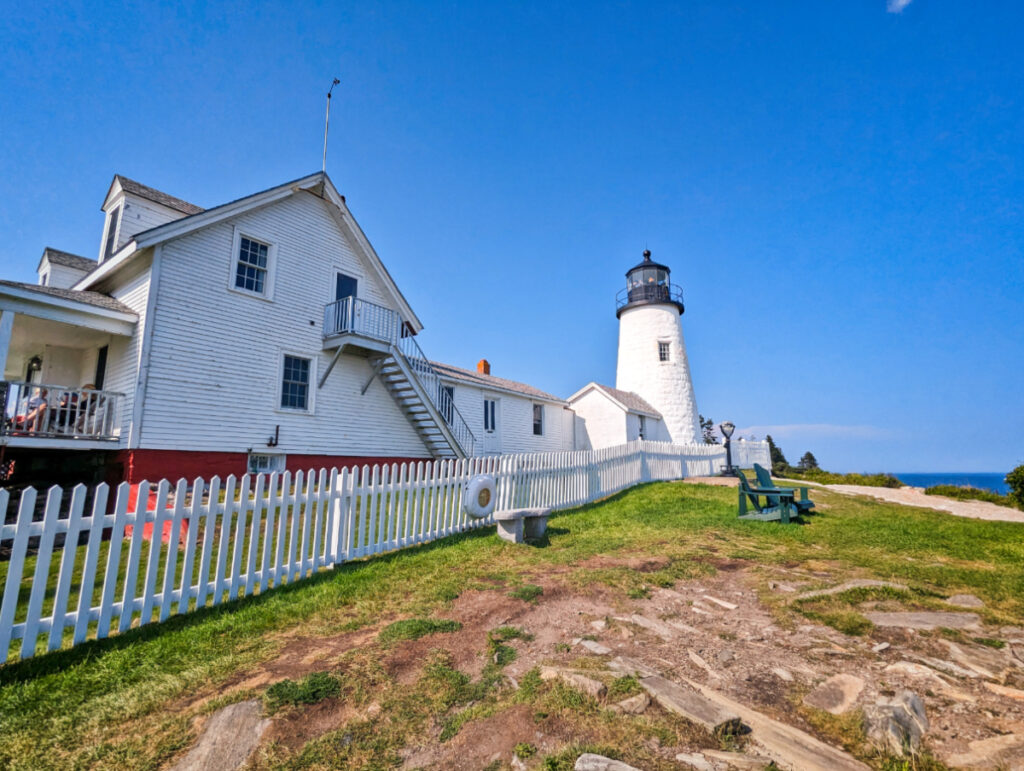
Boothbay Harbor is your destination for more than the Coastal Maine Botanical Gardens, but the actual town is cool and is the launch point for the Cap’n Fish’s tours out to see lighthouses and puffins. You’ll get to see the Cuckolds Lighthouse, Burnt Island Light, and maybe even the Hendrick’s Head lighthouse. Pemaquid Point Lighthouse in Bristol is the most commonly seen lighthouse in the Midcoast stretch… because it’s on the Maine state quarter and millions of people see it everyday (Ha ha ha!). The tower sits on deeply grooved metamorphic rock that draws photographers and general lighthouse lovers because it’s so cool. The Fishermen’s Museum on site is an interesting attraction as is the gallery, and the grounds are open mid-May through mid-October with a per-person admission fee. Late afternoon works especially well here because the rocks and tower catch warm, directional light from the southwest. Build this into a Midcoast driving day rather than treating it as a standalone detour.
The Marshall Point Light in Port Clyde is compact, photogenic, and surrounded by a working harbor that adds natural foreground interest to every shot. This is also known as the Forrest Gump Lighthouse. Both have seasonal museums and on-site parking, with free or low-cost access at the lot. Here in Port Clyde is also where you’ll get the Monhegan Boat Line to see more!
Two Midcoast lighthouses require more deliberate planning because they sit on offshore islands. Monhegan Island Light is reached via the Monhegan Boat Line from Port Clyde; the museum is open July through September, no cars are allowed on the island, and a day trip typically involves a 10:30am departure with a 4:30pm return. Round-trip tickets run $52 for adults and $35 for children ages 2 to 12. Advance reservations are required and tickets are held until 30 minutes before departure. And you’ll actually see two other lighthouses on this boat tour, including the Franklin Island Lighthouse and a view of the Marshall Point light from the water.
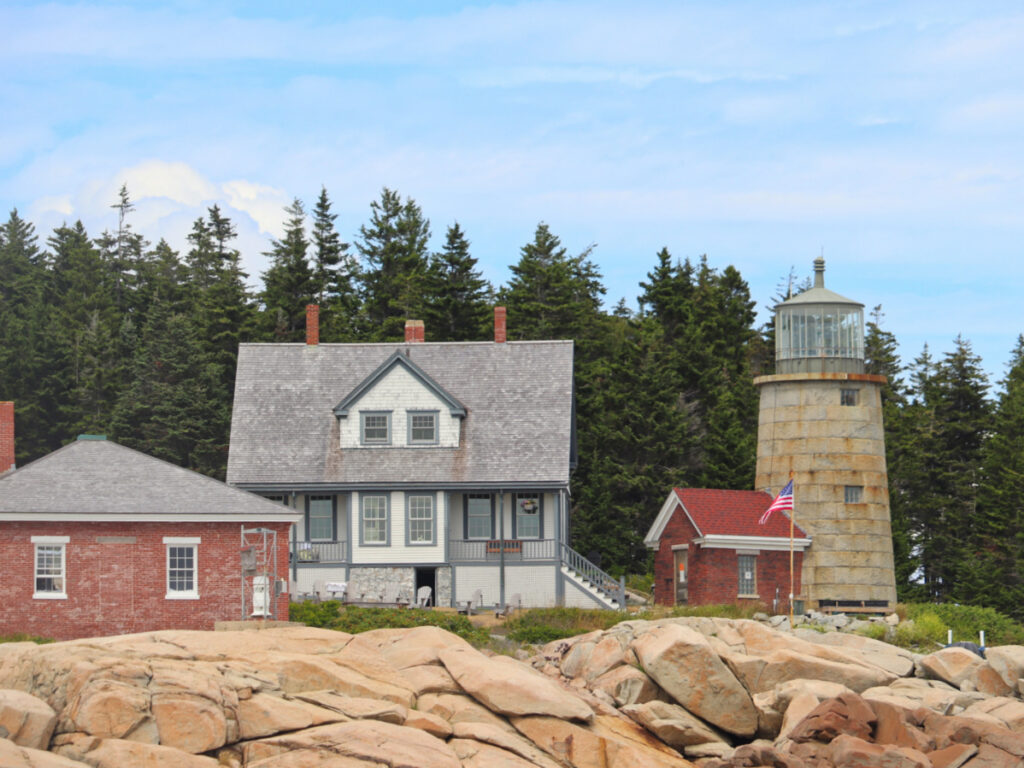
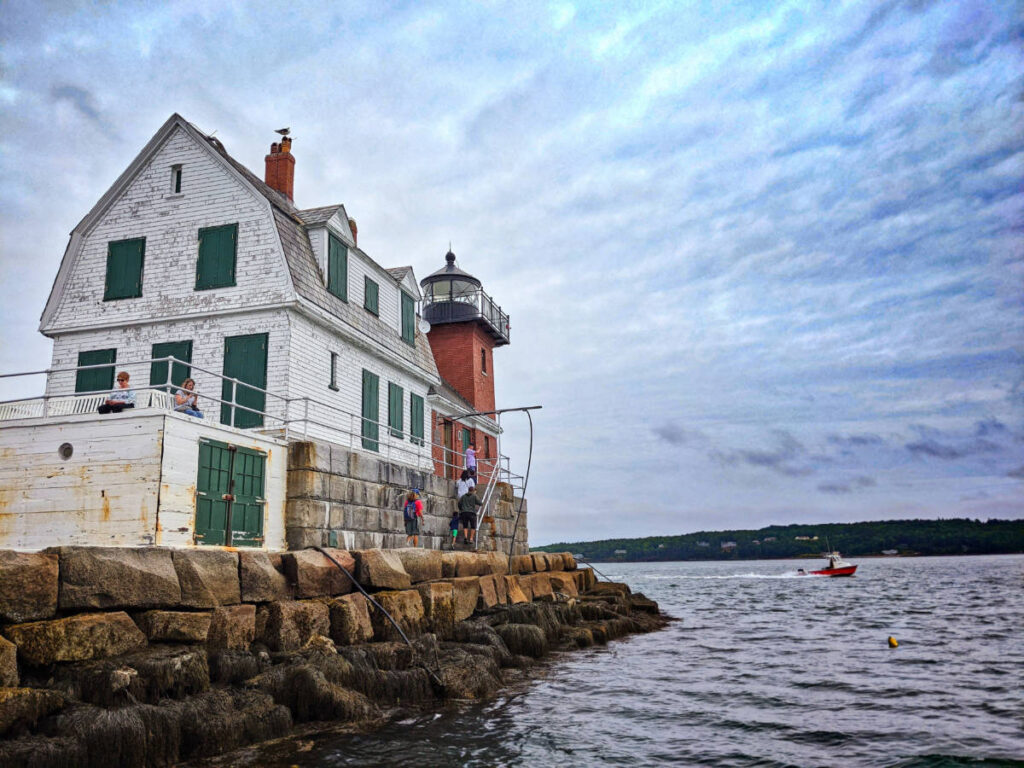
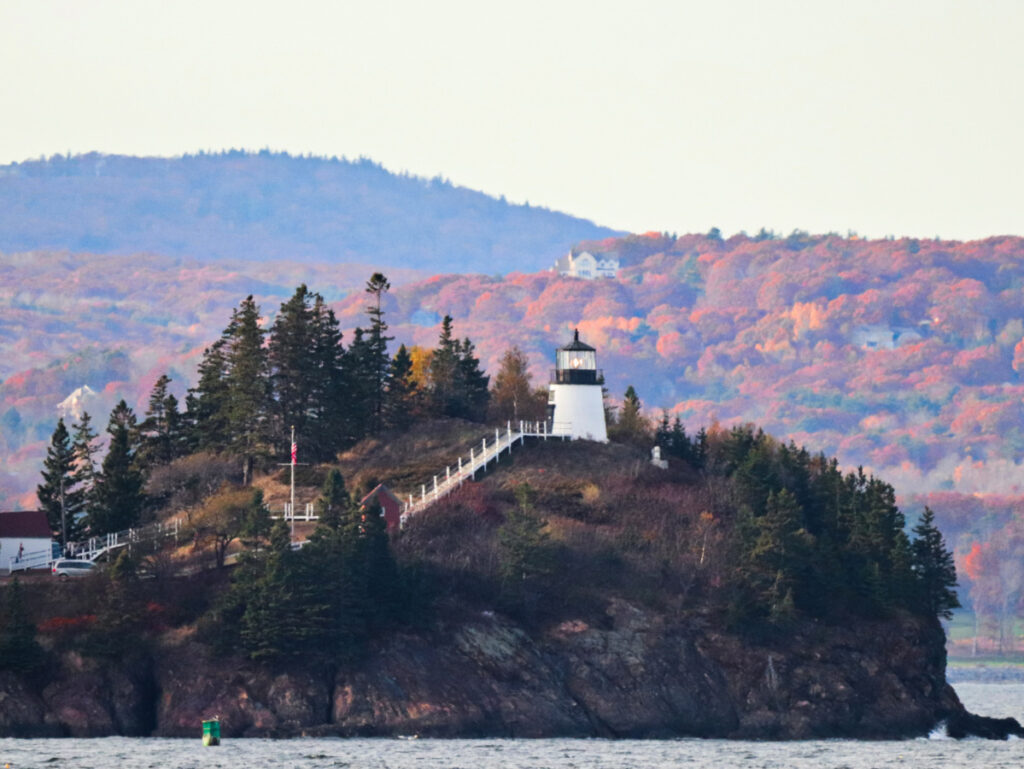
If you’re up for some kayaking, leaving from Spruce Head or South Thomaston you can paddling through the nearby islands and go past the Whitehead Island Lighthouse while also catching a few of the Two Bush Lighthouse a little farther out. Continue your drive up towards Rockland, stopping at Owls Head Lighthouse and then make your way to the Rockland Breakwater Light which sits at the end of a nearly mile-long granite causeway, and the walk itself is part of the experience, allow 30 to 40 minutes each way.
Mid Coast Maine Lighthouses List
There are a few more Midcoast Maine lighthouses to visit on your road trip if you want. It’s all about planning and staying on a schedule if you’re trying to get them all.
- Squirrel Point Light, Arrowsic
- Doubling Point Light, Arrowsic (private residence)
- Hendricks Head Light, Southport
- Pemaquid Point Light, Bristol
- Marshall Point Light, Port Clyde
- Owls Head Light, Rockland
- Rockland Breakwater Light, Rockland
- Curtis Island Light, Camden
- Dice Head Light, Castine
Downeast and Acadia-area Lighthouses
Bass Harbor Head Light sits inside Acadia National Park on Mount Desert Island and earns its reputation as the most photographed lighthouse in Maine. The NPS maintains accessible parking with three designated ADA spaces, a wheelchair-accessible viewing area, and a restroom at the end of the parking lot. The tower is a private Coast Guard residence and not open for entry, but the view from the ledge below the lighthouse is the shot most visitors are after. On summer weekends, the parking lot fills fast; arriving at first light solves both the crowd problem and the lighting challenge simultaneously. If you arrive late morning until sunset, you’ll likely be sitting in your car waiting to cycle through the parking area. There are a few other lighthouses in Bar Harbor, so keep your eyes out from the many viewpoints around Acadia.
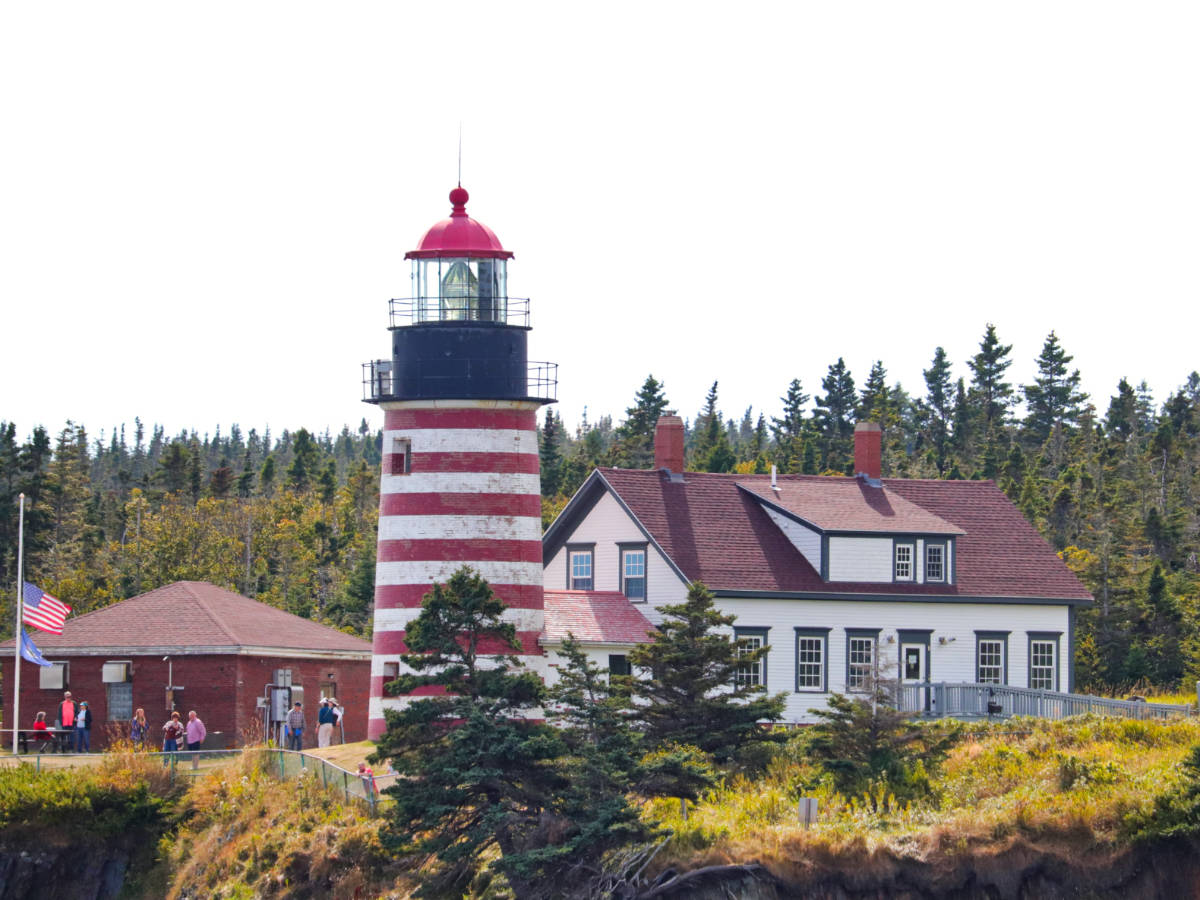
West Quoddy Head Light in Lubec is the furthest point on any Maine lighthouse driving route, but it earns its place as a highlight on the Downeast loop. The candy-striped red-and-white tower is one of the most visually distinctive structures on the coast (I love seeing it from the water). The visitor center and museum are open Memorial Day weekend through mid-October, daily from 10am to 4pm. West Quoddy Head is also the first place in the continental United States to receive sunrise, which makes the early morning photography here unusually busy for being so far out. The actual lighthouse site meets ADA standards, with accessible parking, accessible restrooms near the lighthouse, and some wheelchair-friendly trails from the parking area.
Visitors with lodging in the Acadia area can layer in a few strong add-on stops. Baker Island Light is accessible by mail boat from Northeast Harbor; the crossing is short and the island is well worth the effort if you have a flexible morning. You can do the ferry over to Winter Harbor if you want too. Boat tours operating out of Bar Harbor and Northeast Harbor pass several lighthouse towers and are a great way to see offshore lights without committing to a full island day trip. These are efficient add-ons for visitors who are already in the area, not as standalone detours that require rerouting your entire trip.
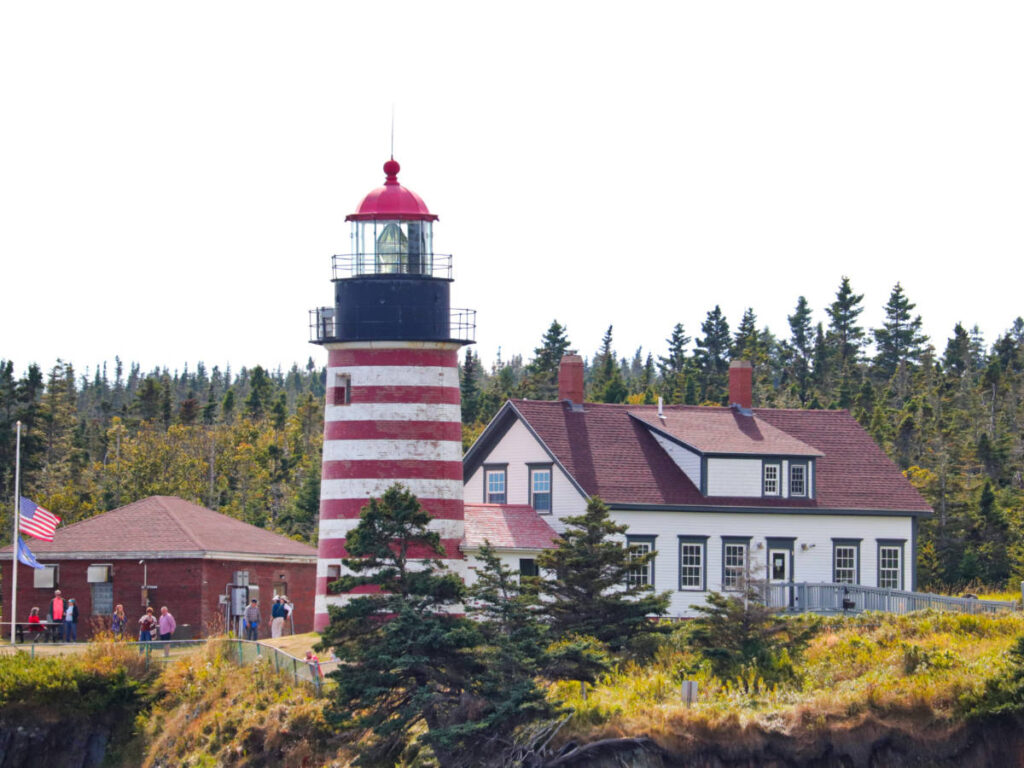
List of Downeast Maine Lighthouses to Visit
If you’ve made it all the way to Downeast Maine, enjoy your time and take in all the history. Bar Harbor is the main town to visit, but there’s more to explore all the way to the Canadian border.
- Bass Harbor Light, Trenton
- Winter Harbor Lighthouse, Winter Harbor
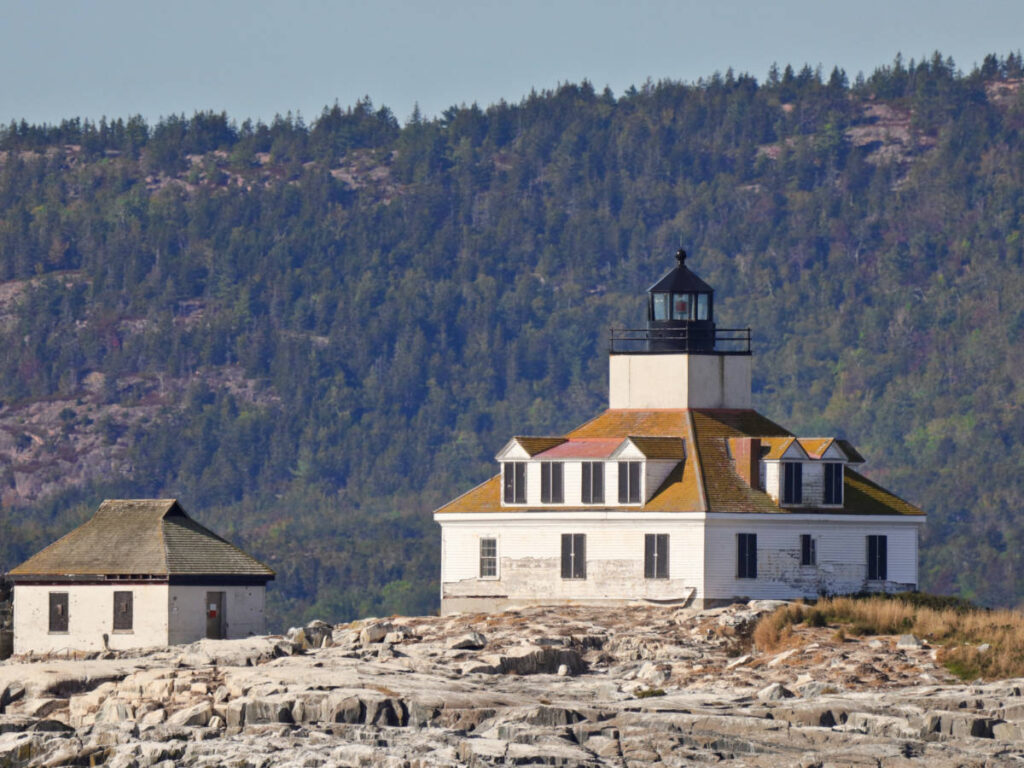
- Egg Rock Lighthouse, Bar Harbor
- Crabtree Ledge Light, Hancock
- Prospect Harbor Light, Prospect Harbor
- Little River Lighthouse, Cutler
- West Quoddy Head Light, Lubec
- Whitlocks Mill Light, Calais
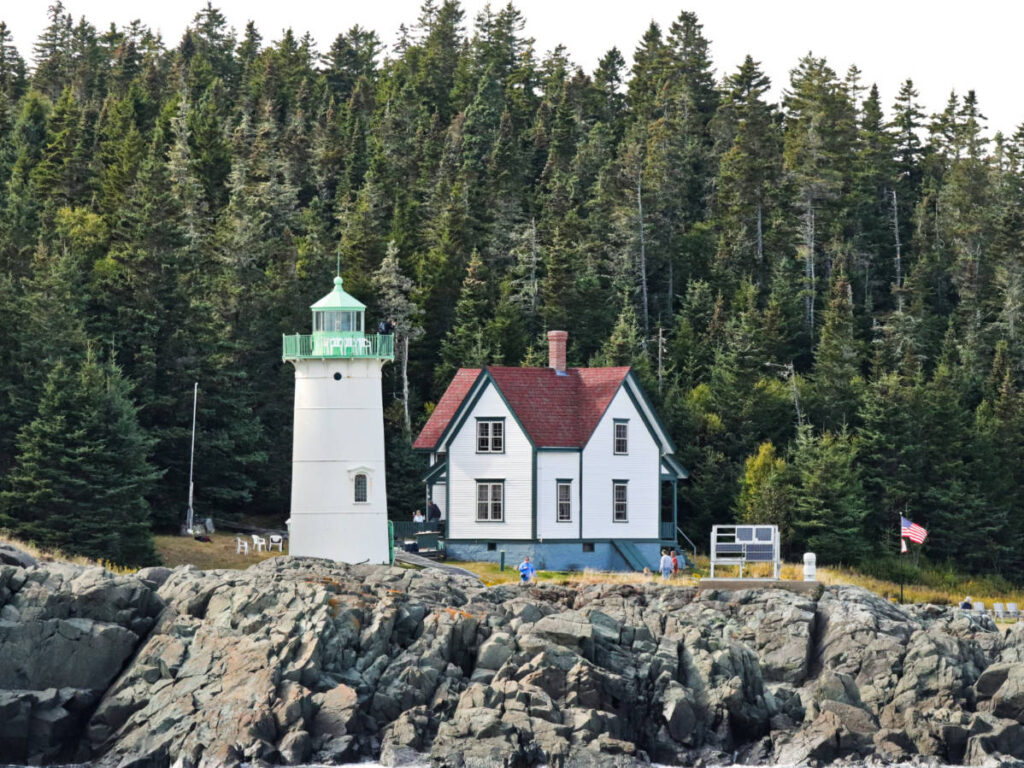
Lighthouse Access Basics: parking, fees, and what you can actually get inside
Most Maine lighthouses are grounds-only experiences. The pattern is consistent across the state’s most visited sites: Portland Head Light has pay parking and no regular tower access, Bass Harbor Head Light is free NPS access with no interior entry, Pemaquid Point charges a small per-person admission fee for the grounds, and West Quoddy Head offers free grounds access with a seasonal museum. Knowing this before you arrive sets realistic expectations and helps you budget your time well.
The one exception to the no-tower-climb rule is Maine Open Lighthouse Day, held on the SECOND SATURDAY of September, from 9am to 3pm. More than 20 light stations across the state open their towers simultaneously that day, and it’s worth building your trip around if tower access is important to you. The participating lighthouse list is typically posted in early June, so check back then for the confirmed lineup for September.
For families and visitors with mobility considerations, the strongest ADA-accessible sites are Portland Head Light, Bass Harbor Head Light, and West Quoddy Head Light. All three have accessible parking, paved or level approach paths to the primary viewpoints, and accessible restrooms on site. Pemaquid Point has restrooms and parking but has less specific ADA documentation available, so contact the site directly before your visit if accessibility details are important to your planning. The breakwater lighthouses aren’t accessible at all, and then Owl’s Head and Squirrel Point require non-flat hikes.
Maine Lighthouse Tours and Coastal Boat Routes
Maine lighthouse tours by boat offer a practical way for visitors who want to see multiple offshore lights without committing to a full island trip for multiple nights. Several operators along the Midcoast run lighthouse-focused excursions that pass Rockland Breakwater, Two Bush Island, and other lights visible from the water. Pairing one of these tours with a driving day along the coast is one of the most efficient ways to see lighthouses near Acadia and the Midcoast in a single trip.
- Bar Harbor Lighthouse Cruises:
- Bar Harbor Whale Watching Grand Slam Lighthouse Tour
- Quintessential Maine: Downeast Windjammer Sailing (book direct here)
- MidCoast from Port Clyde:
- MicCoast from Boothbay Harbor:
- Southern Maine from Portland:
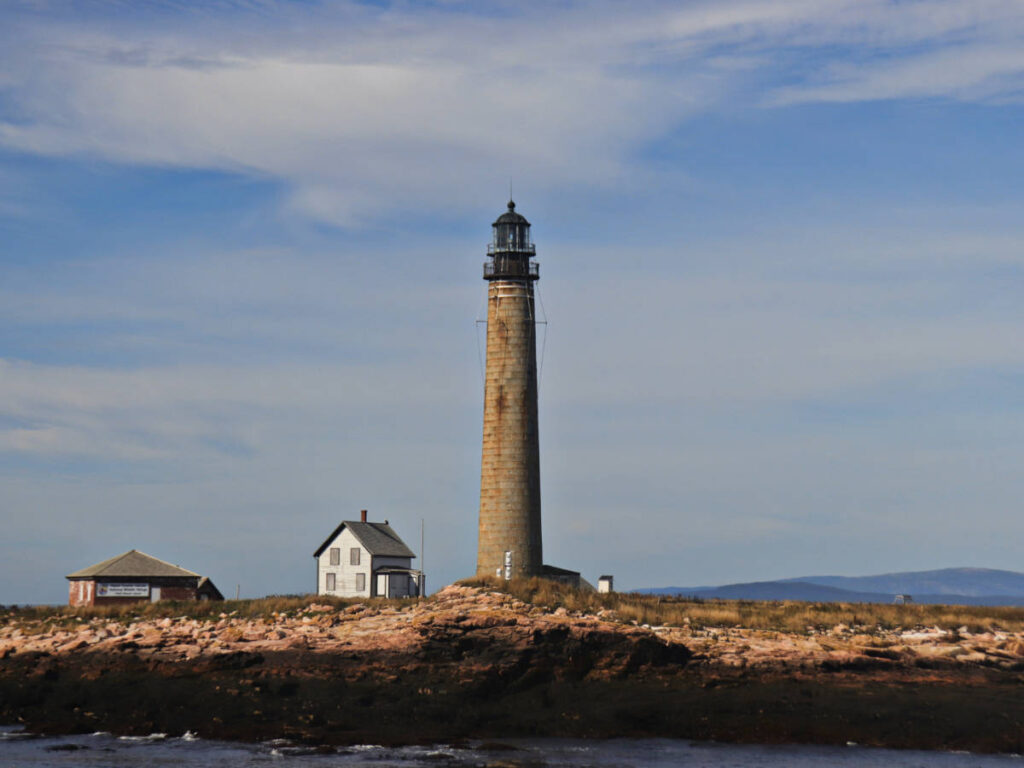
Best Times for Maine Lighthouse Photography
September and October outperform summer for lighthouse photography in almost every category. Crowd levels drop significantly after Labor Day, the air clears, and occasional autumn color in the coastal landscape adds depth behind the lighthouses (check out Owl’s Head below). Early September still offers long enough days for a golden-hour sunrise visit, while mid-October tilts toward dramatic low-angle light that suits rock ledges and stone towers especially well. Summer gives you easy access and long shooting days, but full parking lots and harsh midday light are real tradeoffs. There’s a reason summer is so popular though. PS: winter is amazing for shooting lighthouses, especially the ones on rivers with ice flows.
The orientation of each lighthouse determines when to show up. East-facing sites like Portland Head Light and West Quoddy Head receive their best natural light in the morning, when the rising sun hits the tower from a better angle. West-facing and south-facing sites, including many of the Midcoast harbors and Bass Harbor Head, reward late-afternoon and sunset visits. The blue hour just after sunset adds some cool depth when the lighthouse beacon is active and harbor lights appear in the frame.
Maine’s coastal mornings often bring low fog or sea haze, especially in summer. Rather than avoiding foggy conditions, time your arrival for just before the fog lifts, usually mid-morning, which creates layered atmospheric shots that clear-day photography can’t replicate. For crowd management, my advice is consistent across every iconic site: arrive early. At Portland Head Light on a July weekend, the parking lot fills before 9am. Getting there at 6:30am gives you clean compositions and an empty breakwater before the day-trippers arrive.
Plan Your Maine Lighthouse Route in Advance
The three coastal regions give you a logical structure for any trip length. Start in the south down in Kittery or at Portland Head Light, move through the Midcoast with Pemaquid Point and Rockland as the main goals, add ferry-access islands if your schedule allows, and finish the Downeast stretch at Bass Harbor and West Quoddy Head. Done efficiently, that’s a minimum of two full days. Done well, with island time, decent photography windows, and a pace that doesn’t feel like a sprint, it takes four to five days.
Our road trip itineraries are built specifically to handle the logistics that make traveling through Maine complicated to plan from scratch: driving distances between sites, overnight stopping points calibrated to the route, ferry booking windows, and which lighthouses pair well in the same afternoon. Rather than piecing a route together from scattered sources, these itineraries are a ready-to-use framework so your time stays on the coast rather than in a planning rabbit hole. Use the lighthouse map (above) to scout your driving segments before you book accommodations.
Clearly we love all of the Maine lighthouses and feel that visiting them is worth the effort. If you arrive with realistic expectations, a flexible schedule, and enough understanding of the roads along Maine’s jagged coast to make smart decisions when ferry schedules shift or fog rolls in, you’ll have a great time. If you have any questions about our recommendation or need some suggestions for your travel planning, please leave a comment or send us a note. We’re always happy to share more and help you plan a fun trip through Maine!